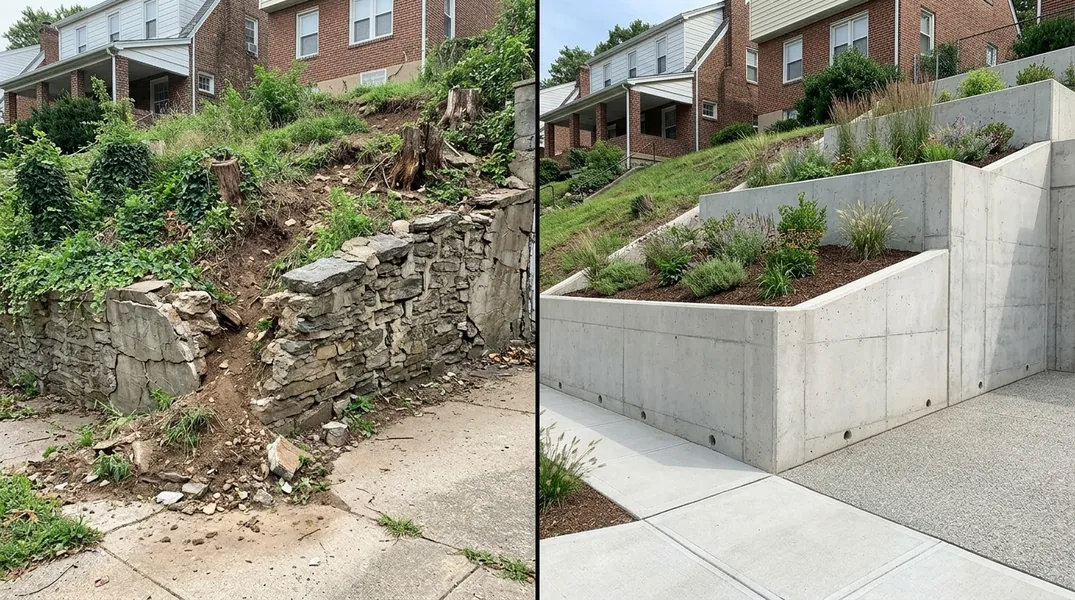
How Philadelphia's Freeze-Thaw Cycle Destroys Retaining Walls
Every winter in Philadelphia, your retaining wall faces an invisible enemy: the freeze-thaw cycle. Water seeps into small cracks and pores in concrete, brick, or stone. When temperatures drop below freezing, that water expands with tremendous force, roughly 9 percent in volume. This expansion pushes outward against the wall's structure from the inside, creating stress that no wall was designed to handle repeatedly.
When spring arrives and temperatures rise, the ice melts and water drains away, but the damage remains. Over months and years of this cycle repeating, tiny cracks become larger fractures. The structural integrity of your wall weakens with each freeze-thaw event. In Philadelphia, where winter temperatures regularly swing above and below 32 degrees Fahrenheit, this cycle can occur dozens of times per season. Unlike regions with consistently cold winters, our unpredictable climate is particularly harsh on retaining walls because the repeated expansion and contraction causes cumulative damage that accelerates failure.
Poor Drainage: The Root Cause of Wall Failure
Water is the enemy of any retaining wall, and poor drainage is the primary culprit behind most failures in the Philadelphia area. When a retaining wall lacks adequate drainage, water accumulates behind it, building hydrostatic pressure against the back face. This pressure pushes the wall forward, straining the structure and the soil it's meant to hold back. Without proper drainage, water sits in the soil, perpetually feeding the freeze-thaw cycle and accelerating deterioration.
Many older Concrete Retaining Walls in the region were installed without modern drainage systems. Gravel backfill, perforated drain pipes, and weep holes are essential components that direct water away from the wall. When these are missing or clogged with sediment and debris, water has nowhere to go except to press against your wall and seep into its structure. This is why Retaining Wall Repair often begins with addressing drainage issues rather than just patching visible cracks.
Warning Signs Your Retaining Wall Is Failing
A leaning retaining wall is often the most obvious red flag, but problems typically develop gradually. Watch for horizontal cracks running across the face of the wall, which indicate that pressure is pushing the wall outward. Vertical cracks, especially those that widen over time, suggest freeze-thaw damage or structural settling. If you notice sections of the wall bulging or bowing outward, this is a serious warning sign that the wall is being pushed by soil and water pressure behind it.
Other warning signs include water seeping or pooling at the base of the wall, soil erosion at the wall's foundation, or vegetation growing at unusual angles away from the wall (roots and soil are literally being pushed). Loose or missing mortar between stone or brick units indicates that freeze-thaw cycles have broken the bonds holding the wall together. If you see any of these signs, don't wait. The longer a failing wall goes unrepaired, the more expensive the eventual fix becomes. Early intervention can mean the difference between a targeted Retaining Wall Repair and a complete Retaining Wall Replacement.
Bowing and Leaning Retaining Walls: Structural Failure in Action
When a retaining wall begins to bow or lean, it means the structural failure is well underway. A bowing retaining wall typically bows outward at its center or upper sections, indicating that hydrostatic pressure and soil weight are overwhelming the wall's ability to resist. This is not a cosmetic issue; it's a safety hazard. A severely bowing wall can collapse suddenly, potentially causing injury or property damage. The soil it's holding back can cascade down, and the wall itself can topple.
Leaning walls present a similar danger. Unlike a wall that remains vertical, a leaning wall has already begun to fail structurally. The causes vary: poor construction, inadequate foundation, freeze-thaw damage, or simply years of accumulated pressure. Regardless of the cause, a leaning wall requires immediate professional assessment. Some leaning walls can be stabilized with targeted reinforcement, while others require complete replacement. The key is getting a professional evaluation quickly. Philadelphia Retaining Wall can assess your wall's condition and recommend the most cost-effective solution. Call us at (445) 278-5117 to discuss your concerns.
Retaining Wall Repair vs. Replacement: When to Choose Each Option
Retaining Wall Repair is appropriate when damage is localized or early-stage. Repairing cracks before they spread, replacing damaged sections, installing or improving drainage systems, and reinforcing walls with tie-backs or bracing can extend your wall's life significantly. If the wall is less than 10 years old and the damage is structural rather than catastrophic, repair is usually the right choice. Repair also costs substantially less than replacement, making it an attractive option for homeowners watching their budget.
However, Retaining Wall Replacement becomes necessary when the wall has failed beyond safe repair. This includes walls that are severely bowing or leaning, walls with multiple large cracks that indicate systemic failure, walls that have settled unevenly, or walls where the foundation has been compromised. If your wall is older than 20 years and showing multiple warning signs, replacement may be more economical than repeated repairs. When you replace a wall, you have the opportunity to install modern drainage systems, use superior materials, and ensure proper construction that will serve you for decades. The pricing for replacement is higher upfront, but the long-term value often justifies the investment.
Getting Professional Help: Retaining Wall Repair Near You
If you're noticing warning signs on your retaining wall, the best step is to get a professional evaluation. DIY repairs to retaining walls are risky because you may not address the underlying cause of failure, such as drainage issues or structural weakening from freeze-thaw cycles. A professional can identify whether your wall needs repair or replacement, assess the severity of damage, and recommend solutions that will actually solve the problem rather than just mask it temporarily.
Philadelphia Retaining Wall has been serving homeowners throughout the region with expert Retaining Wall Installation, repair, and replacement services. We understand the unique challenges that Philadelphia's climate poses to retaining walls, and we know how to build walls that withstand freeze-thaw cycles and heavy rainfall. Whether you need a quick repair or a complete wall replacement, we can help. Contact us today for a free estimate or call (445) 278-5117 to discuss your retaining wall concerns with one of our specialists.
Looking for a professional retaining wall contractor in Philadelphia? Philadelphia Retaining Wall responds fast for all your retaining wall needs.
Get a Free QuoteOur services: Retaining Wall Installation · Retaining Wall Repair · Retaining Wall Replacement