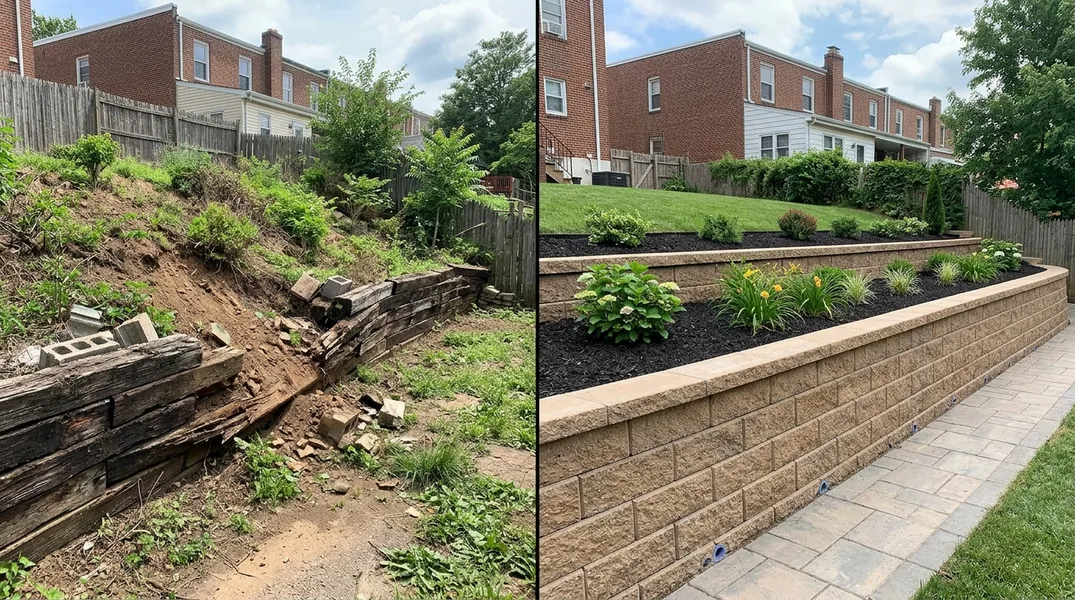
Understanding Why Retaining Walls Lean and Fail
Retaining walls are engineering structures designed to hold back soil and prevent erosion on sloped properties. In Philadelphia, where many properties feature tight rowhome lots with significant grade changes, retaining walls are often critical to landscape stability and home protection. However, these walls don't last forever, and several factors can cause them to lean, crack, or fail entirely.
The most common culprit is water damage. When water accumulates behind a retaining wall, it creates hydrostatic pressure that pushes against the structure. Philadelphia's freeze-thaw cycles make this worse. Water seeps into soil behind the wall, freezes in winter, expands, and pushes the wall outward. Over years or even months, this pressure causes the wall to bow, lean, or develop visible cracks. Poor drainage, missing weep holes, and clogged drainage systems accelerate this process significantly.
Beyond water, soil composition and ground movement play major roles. Heavy clay soils common in the region retain moisture and expand when wet. Tree roots can also destabilize walls by creating voids or applying lateral force. Foundation settling, especially on older rowhome properties, can shift the wall out of plumb. Age is another factor. A 20 or 30-year-old Concrete Retaining Walls structure may simply reach the end of its serviceable life, particularly if it was built without proper reinforcement or drainage.
Signs Your Retaining Wall Needs Immediate Attention
Catching problems early can sometimes save you money and prevent property damage. The most obvious warning sign is visible lean or tilt. If your wall is no longer vertical or appears to be pulling away from the soil it's supposed to retain, that's a red flag. You might also notice horizontal cracks running across the wall face, which indicate stress from pressure buildup. Vertical or diagonal cracks are less critical but still warrant inspection, as they can worsen and allow water penetration.
Water seeping from the base of the wall or pooling on your property side signals drainage failure. Soil erosion at the toe of the wall, bulging or bowing in the middle section, or chunks of concrete spalling off are all signs of advanced deterioration. If you notice the wall is actively moving (cracking worsens noticeably month to month), don't delay. A failing retaining wall can eventually collapse, potentially damaging your home's foundation, driveway, or neighboring properties. In Philadelphia, where properties are often close together on rowhome blocks, this liability is serious.
Repair vs. Replacement: How to Decide
The decision between Retaining Wall Repair and Retaining Wall Replacement depends on several factors: the wall's age, the extent of damage, its height and complexity, and the underlying cause of failure. A younger wall with minor cracks and good structural integrity may be a good candidate for repair. Targeted fixes like sealing cracks, improving drainage, installing additional reinforcement, or injecting epoxy can extend the wall's life significantly and cost considerably less than full replacement.
However, if the wall is leaning severely, has lost structural integrity, is over 30 years old, or has damage affecting more than 30 percent of its surface area, replacement is usually the smarter choice. A repaired wall that's fundamentally compromised will likely fail again, leaving you with the same problem and additional repair costs. Retaining Wall Replacement allows you to build a new structure with modern drainage systems, proper reinforcement, and materials suited to Philadelphia's climate. The new wall will carry a warranty and provide decades of reliable service.
The root cause also matters. If your wall failed due to poor drainage, repair may work if you address the drainage problem. If it failed due to structural design flaws or severe soil conditions, replacement with a properly engineered solution is safer. A professional inspection is essential before deciding. A contractor can assess the wall's structural condition, determine what caused the failure, and recommend the most cost-effective path forward.
Retaining Wall Repair Options and When They Work
Minor to moderate retaining wall damage can often be addressed through targeted repair work. Retaining wall crack repair using epoxy injection is an effective solution for hairline to moderate cracks that don't affect structural capacity. This process fills cracks and prevents water infiltration, stopping further deterioration. Sealing the wall surface with a waterproof coating also helps protect against moisture damage and extends the wall's lifespan.
Improving drainage is one of the most valuable repairs you can make. Installing or clearing weep holes, adding a perforated drain pipe behind the wall, or regrading the area to direct water away from the structure can dramatically reduce pressure and prevent future problems. For walls that are leaning slightly but still structurally sound, adding reinforcement through carbon fiber strips or helical anchors can stabilize the structure without full replacement.
Base repair is another common approach. If the wall's toe is eroding or settling, underpinning or adding a concrete footer can restore stability. These repairs are typically less expensive than replacement and can buy you another 10 to 20 years of service. However, repairs work best when the wall's fundamental design and material are sound. If the wall was poorly constructed to begin with or has widespread deterioration, repair becomes a temporary band-aid rather than a real solution.
The Case for Full Retaining Wall Replacement
Full Retaining Wall Replacement is the right choice when damage is extensive or the wall has reached the end of its useful life. Replacing a wall gives you the opportunity to build it correctly from the start. A new wall can be designed with proper drainage, adequate reinforcement, appropriate materials for your soil and climate, and correct dimensions for your specific slope and soil conditions. This engineered approach prevents the problems that plagued the old wall.
Modern retaining wall materials offer advantages over older concrete. Segmental retaining wall blocks (SRWs) are popular because they're flexible, drain well, and are relatively easy to repair if individual blocks are damaged. Reinforced concrete walls with proper geotechnical design provide excellent durability. Your contractor can recommend the best material and design based on your site conditions, budget, and aesthetic preferences.
Replacement also eliminates liability concerns. A new wall comes with contractor warranties and is built to current building codes. If you ever sell your Philadelphia home, a new retaining wall is an asset that adds value and gives buyers confidence. The upfront cost is higher than repair, but when you factor in durability, reduced maintenance, and peace of mind, replacement is often the better long-term investment. A professional can provide detailed cost comparisons so you can make an informed decision.
Getting Professional Help: What to Expect
Whether you're leaning toward repair or replacement, a professional inspection is the essential first step. A qualified retaining wall contractor will examine the wall's condition, check for structural damage, assess drainage, evaluate soil conditions, and determine what caused the problem. They'll take measurements, photograph the damage, and discuss options with you in plain language. This inspection typically costs less than $300 and provides clarity that prevents costly mistakes.
Philadelphia Retaining Wall specializes in both repair and replacement work for homeowners throughout the region. We can evaluate your leaning or damaged wall, explain your options, and provide a detailed proposal with transparent pricing. Our team has the experience to handle the unique challenges of Philadelphia's rowhome lots, tight spaces, and soil conditions. If you're concerned about a leaning or cracked retaining wall, reach out for a free estimate. You can also call us at (445) 278-5117 to discuss your situation and schedule an inspection. Taking action now can prevent more serious and expensive problems down the road.
Looking for a professional retaining wall contractor in Philadelphia? Philadelphia Retaining Wall responds fast for all your retaining wall needs.
Get a Free QuoteOur services: Retaining Wall Installation · Retaining Wall Repair · Retaining Wall Replacement