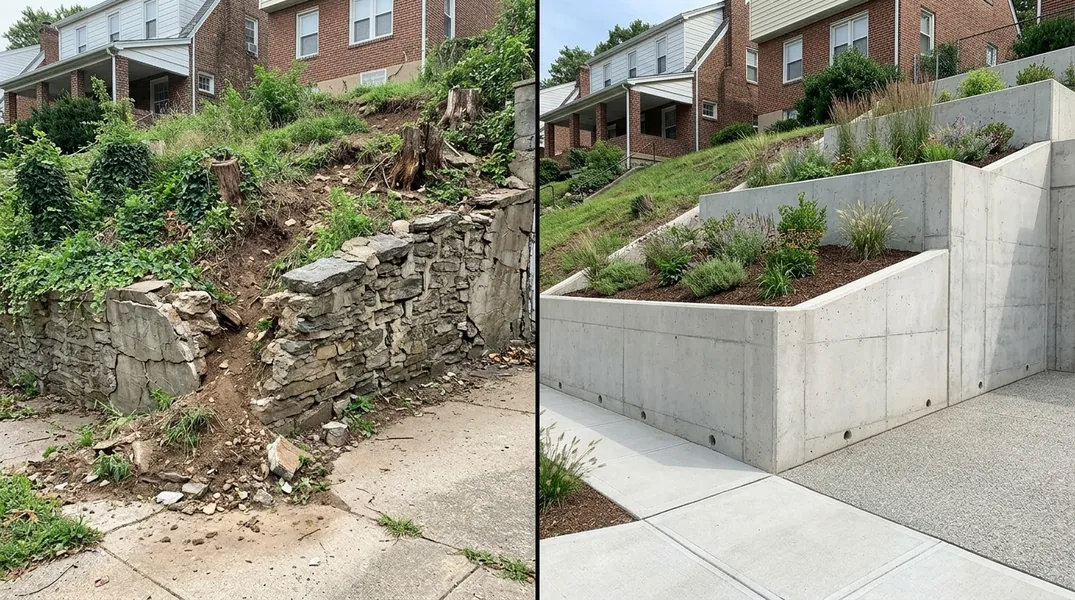
Why Drainage Failures Are the #1 Threat to Your Retaining Wall
Most homeowners in Philadelphia don't think about what happens behind their retaining wall until cracks appear or the structure starts to lean. The culprit is almost always the same: water. Specifically, water that isn't being managed properly through adequate retaining wall drainage.
When soil becomes saturated, it exerts tremendous pressure against the back of your wall. This force, known as hydrostatic pressure retaining wall conditions, can push a properly built structure out of alignment or cause it to fail entirely. In Philadelphia's climate, where winter thaws alternate with spring downpours and summer thunderstorms are common, drainage failures happen faster than most homeowners realize. Without proper drainage systems in place during initial Retaining Wall Installation, you're essentially setting up a ticking time bomb.
How Philadelphia's Freeze-Thaw Cycles Accelerate Wall Damage
Philadelphia's winters create a unique challenge for retaining walls. When temperatures drop below freezing, water trapped in the soil behind your wall freezes and expands. This expansion, called frost heave, pushes against your wall with enormous force. Then, as the temperature rises above freezing, the ice melts, water drains downward, and the cycle repeats. Over a winter season with multiple freeze-thaw events, this repeated pressure can cause structural damage that might not be visible until spring arrives.
The problem becomes exponential when your wall lacks proper drainage infrastructure. Without a Retaining Wall French Drain, water has nowhere to escape. It pools behind the wall, freezes solid, and creates pressure points that stress the structure. Homeowners often notice this damage in March or April when they see bowing, cracking, or tilting. By that time, the damage is already significant, and you may need Retaining Wall Repair or even complete Retaining Wall Replacement rather than simple preventative maintenance.
Summer Downpours and Hydrostatic Pressure: A Perfect Storm
While winter freeze-thaw cycles are destructive, summer brings a different threat. Philadelphia's summer thunderstorms can dump several inches of rain in a matter of hours. When this happens, soil behind your retaining wall becomes completely saturated. All that water creates hydrostatic pressure retaining wall conditions that push horizontally against your structure with force comparable to a small vehicle pressing against the wall.
Think of it this way: saturated soil weighs significantly more than dry soil, and that weight translates into sideways pressure. A wall that was designed without accounting for heavy rainfall or with inadequate drainage will start to fail under these conditions. You might see water seeping through cracks, mud appearing at the base of the wall, or the wall itself beginning to bow outward. These are all signs that hydrostatic pressure is overwhelming your current drainage system. If you've noticed any of these warning signs after heavy rain, it's time to call a professional for a free estimate.
The Critical Role of Retaining Wall French Drains
A Retaining Wall French Drain is one of the most effective solutions for managing water behind your wall. This system uses a perforated pipe surrounded by gravel and filter fabric to intercept water before it builds up pressure against your structure. The pipe directs water away from the wall and down to a lower elevation or daylight outlet, preventing saturation and the hydrostatic pressure that destroys walls.
French drains are particularly valuable in Philadelphia because they handle both the spring thaw runoff and the intense summer storms our region experiences. When installed properly during the initial Retaining Wall Installation, a French drain system can extend the life of your wall by decades. The system sits behind the wall, typically at or near the base, where it catches water before it can accumulate and create dangerous pressure. Without this infrastructure, even a well-built wall of Concrete Retaining Walls will eventually fail.
Signs Your Retaining Wall's Drainage Is Failing
Recognizing drainage failure early can save you thousands of dollars in repair costs. Some warning signs are obvious: water actively seeping through cracks or weeping from the face of the wall, mud or soft soil at the base, or visible standing water on the ground behind the wall. Other signs are more subtle but equally important. If you notice the wall is leaning outward, even slightly, or if cracks are widening over time, drainage failure is likely the cause.
Efflorescence, a white powdery substance that appears on the wall's surface, indicates water movement through the concrete. Displaced or crumbling mortar between blocks suggests repeated water infiltration and freeze-thaw cycles. Even if your wall looks structurally sound, poor drainage is still working against it. The longer you wait to address drainage issues, the more expensive your eventual repair or replacement will be. If you're seeing any of these signs, contact Philadelphia Retaining Wall at (445) 278-5117 to discuss your options.
Preventing Drainage Failures: What You Can Do Now
The best approach to drainage is prevention. If you're planning Retaining Wall Installation, make sure proper drainage is included in the design and budget. Specify a French drain system, ensure adequate backfill with gravel, and plan for water to exit the system safely. These elements should never be cut from a project to save money, because the cost of repair far exceeds the cost of prevention.
If you already have a wall with drainage problems, you still have options. Sometimes additional surface drainage, like grading the ground away from the wall or installing gutters to redirect roof runoff, can help. In other cases, retrofitting a French drain system behind an existing wall is possible, though more expensive than installing one during construction. For existing walls showing signs of distress, professional assessment is essential. Contact Philadelphia Retaining Wall for a free estimate and let our team evaluate your specific situation. We serve Philadelphia and surrounding areas, and we understand the unique drainage challenges our climate creates.
Looking for a professional retaining wall contractor in Philadelphia? Philadelphia Retaining Wall responds fast for all your retaining wall needs.
Get a Free QuoteOur services: Retaining Wall Installation · Retaining Wall Repair · Retaining Wall Replacement