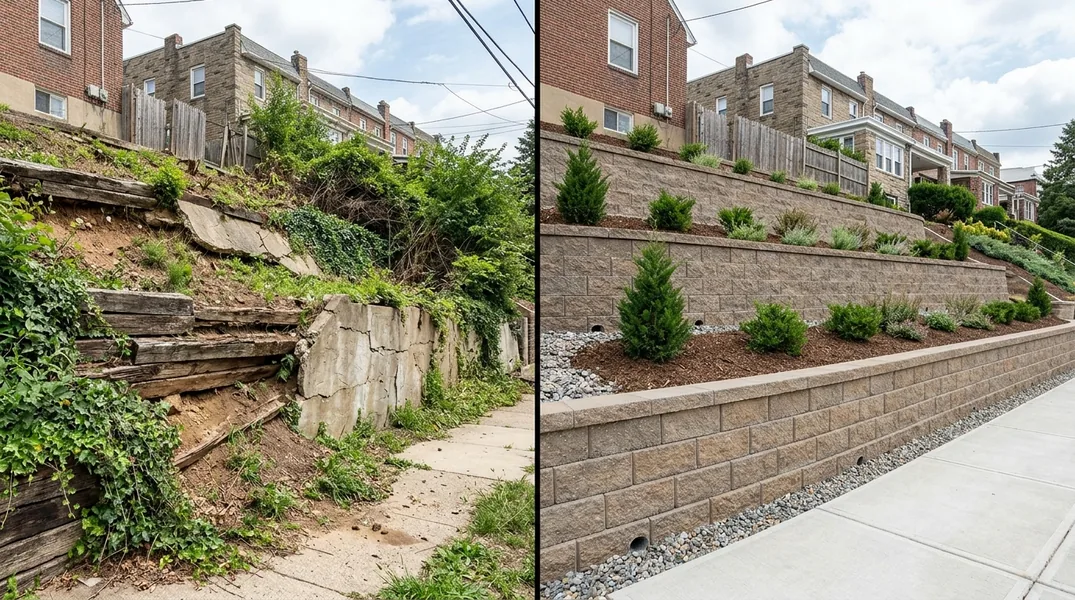
Do You Need a Permit for a Retaining Wall in Philadelphia?
If you're planning a Retaining Wall Installation in Philadelphia, one of the first questions you should ask is whether you need a permit. The short answer is: it depends on the height and scope of your project. In most cases, retaining walls do require a permit from the city, but the specific requirements vary based on local building codes and the wall's dimensions.
The City of Philadelphia enforces strict building regulations to ensure structural safety and prevent property damage. Before breaking ground on your retaining wall project, understanding these regulations will save you time, money, and potential legal headaches. Failing to obtain the proper permits can result in fines, forced removal of the structure, or complications when selling your property.
Retaining Wall Height Limits in Philadelphia
One of the most critical factors in determining whether you need a permit is the height of your retaining wall. Concrete Retaining Walls and other wall types are subject to height restrictions under Philadelphia's building code. Generally, retaining walls that exceed four feet in height almost always require a permit and must be designed by a licensed engineer.
A 4 foot retaining wall permit in Philadelphia may fall into a gray area depending on other factors such as soil conditions, drainage, and proximity to property lines. Walls at or near the four-foot mark should be evaluated carefully to determine compliance. If your wall will be taller than four feet, you'll definitely need a permit, engineering plans, and approval from the city before construction begins. Even seemingly minor projects can trigger permitting requirements, so it's worth checking with your local building department or consulting with a professional installer.
Understanding Philadelphia's Building Code Requirements
Philadelphia's building code is based on the International Building Code (IBC), with local amendments that reflect the city's specific needs and conditions. These codes exist to protect homeowners, neighboring properties, and the public from structural failure, erosion, and other hazards. When it comes to retaining walls, the code addresses factors like soil bearing capacity, drainage, and lateral earth pressure.
The building department typically requires detailed plans and calculations for walls that exceed certain thresholds. These plans must be prepared by a licensed professional engineer and include information about the soil conditions, the proposed wall design, drainage systems, and construction details. If your project involves significant grading changes, is located near a slope, or will retain a large amount of soil, engineering review becomes even more critical. The permit process ensures that your retaining wall will stand safely for decades and won't cause problems for your neighbors or future property owners.
When a Permit Is Required vs. When It May Not Be
Not every small retaining wall project requires a permit, but the distinction can be confusing. Generally, very small walls used for landscaping purposes, such as those under two to three feet in height with minimal retained soil, may be exempt from permitting in some cases. However, this exemption varies depending on the specific location within Philadelphia and the exact circumstances of your project.
The safest approach is to assume your project requires a permit unless you've explicitly confirmed otherwise with the Philadelphia Department of Licenses and Inspections. Factors that trigger permit requirements include walls over four feet tall, walls that will support a structure, walls in flood-prone areas, and walls on steep slopes. Additionally, if your retaining wall project involves any excavation, grading, or drainage work that affects neighboring properties, a permit is almost certainly necessary. When in doubt, it's far better to apply for a permit than to face the consequences of an unpermitted installation.
The Permit Application Process in Philadelphia
Applying for a retaining wall permit in Philadelphia involves submitting detailed plans and documentation to the Department of Licenses and Inspections. The process typically begins with preparing site plans that show the location of the wall, its dimensions, and how it relates to your property and neighboring properties. For larger or more complex projects, you'll need engineering drawings prepared by a licensed professional engineer who is familiar with Philadelphia's building codes.
Once you've prepared your plans, you'll submit them along with the permit application and applicable fees. The city will review your submission to ensure it complies with all relevant codes and regulations. This review process can take several weeks, so plan accordingly if you're working on a timeline. After approval, you'll receive your permit and can proceed with construction. Inspections may be required at various stages of the work to verify that construction matches the approved plans. Working with an experienced Retaining Wall Installation contractor can simplify this process significantly, as they'll be familiar with local requirements and can coordinate with inspectors.
Why Professional Installation Matters for Permit Compliance
Hiring a professional contractor like Philadelphia Retaining Wall ensures that your project meets all permit requirements and local building codes from start to finish. Professional installers understand the nuances of Philadelphia's regulations and can help you navigate the permitting process efficiently. They'll know whether your specific project requires a permit, what documentation is needed, and how to avoid costly mistakes that could delay your project or result in fines.
Beyond permit compliance, professional installation ensures your retaining wall is built correctly with proper drainage, adequate structural support, and attention to soil conditions. A poorly constructed wall can fail, causing erosion, property damage, and safety hazards that far exceed the cost of doing the job right the first time. If you're considering a Retaining Wall Installation or need Retaining Wall Repair, reaching out for a free estimate is a smart first step. You can also call us at (445) 278-5117 to discuss your project and get answers to your specific questions about permits and pricing.
Looking for a professional retaining wall contractor in Philadelphia? Philadelphia Retaining Wall responds fast for all your retaining wall needs.
Get a Free QuoteOur services: Retaining Wall Installation · Retaining Wall Repair · Retaining Wall Replacement